Summary :
• Scientists are developing new ultra-black materials to make solar towers absorb more sunlight
• These materials could help concentrated solar power become a more reliable and efficient energy source
• Improved solar absorption means cleaner energy and better storage for use when the sun is not shining
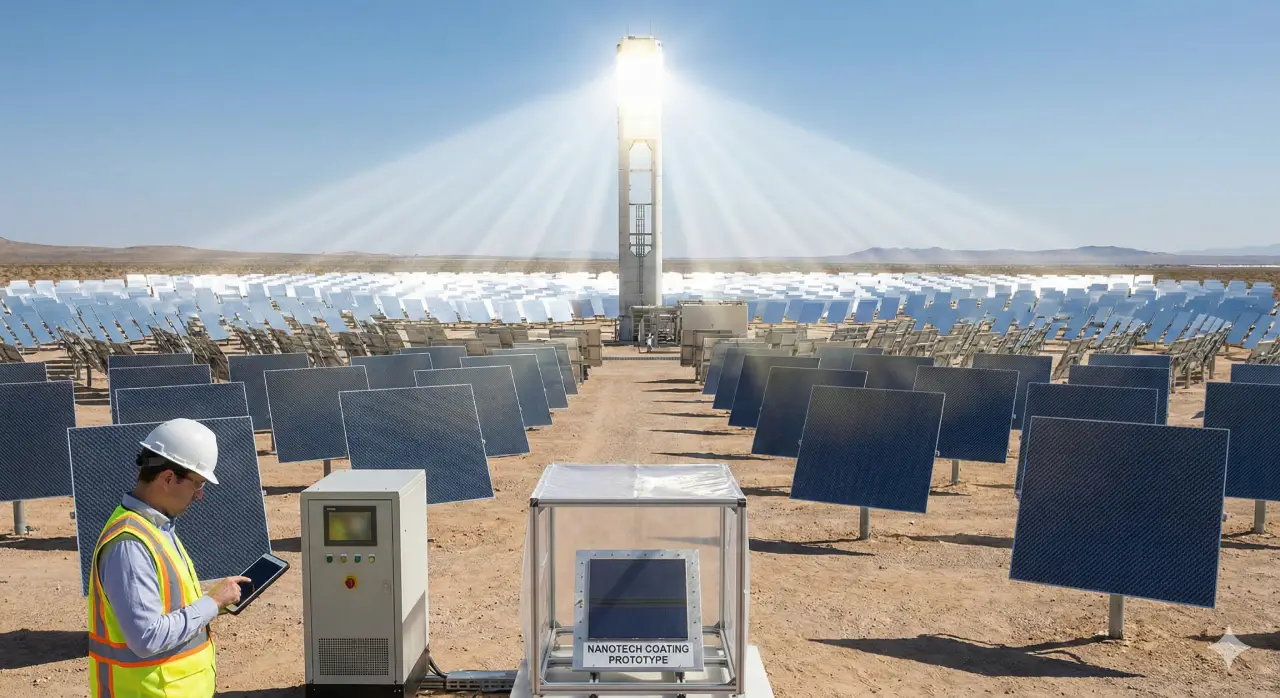
Concentrated solar power (CSP) is a promising technology for generating renewable energy. Unlike traditional solar panels, CSP uses hundreds of mirrors to focus sunlight onto a central tower. This intense concentration of sunlight heats up the tower, allowing the energy to be stored as heat and used to generate electricity even when the sun goes down. However, the effectiveness of CSP depends on how well the tower can absorb the concentrated sunlight.
Researchers from the University of the Basque Country (EHU) are exploring new materials to improve this process. Their focus is on creating ultra-black surfaces that can absorb nearly all the sunlight directed at them. The blacker the material, the more sunlight it can capture and convert into heat.
Until recently, the best materials for absorbing light were made from carbon nanotubes. These are tiny, tube-shaped structures that are very good at trapping light, absorbing about 99% of it. However, carbon nanotubes have some drawbacks. They do not hold up well under high temperatures or in humid conditions, both of which are common in solar tower environments. To protect them, extra coatings are needed, but these can reduce their ability to absorb light.
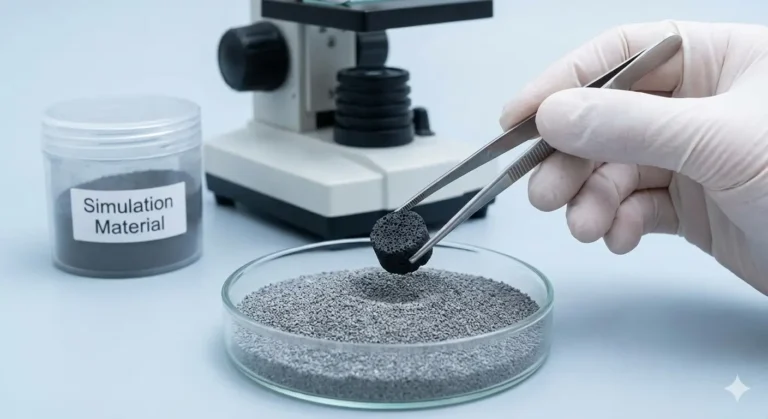
The EHU team tested a new material: copper cobaltate nanoneedles. These are microscopic, needle-shaped structures that are even better at absorbing light than carbon nanotubes. When coated with a thin layer of zinc oxide, their performance improves even further, absorbing up to 99.5% of incoming sunlight. Not only are these nanoneedles highly effective, but they are also more stable at the high temperatures found in solar towers.
This breakthrough could make CSP plants more efficient and reliable. In places like Spain, only about 5% of the country’s energy currently comes from CSP, but this number could rise if the technology becomes more competitive. One of the main advantages of CSP is that it can store heat in melted salts, which hold onto energy for hours. This means electricity can be produced even after sunset, making renewable energy more practical and flexible.
Researchers are continuing to test and improve these nanoneedle coatings, looking for ways to make them even more efficient and durable. If successful, these materials could help concentrated solar power play a bigger role in the shift to cleaner energy. This research was published by the Thermophysical Properties of Materials group at the University of the Basque Country (EHU).
The study involved researchers Iñigo González de Arrieta, Telmo Echániz, and Gabriel López from EHU, in collaboration with Dr. Renkun Chen of the University of California San Diego.