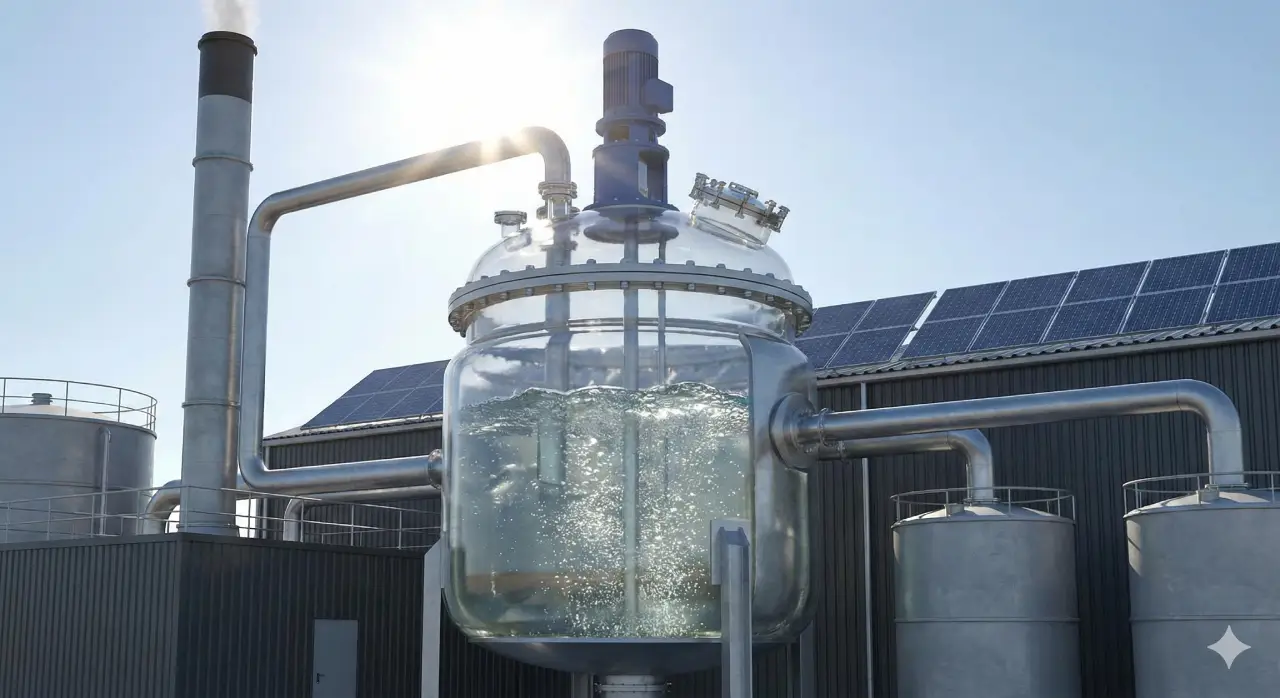
Image for Illustrative Purposes Only.
Summary:
• Scientists have found a new way to turn methane, a harmful greenhouse gas, into ethylene using sunlight.
• The process uses a special catalyst made from palladium, gold, and titanium dioxide to make the reaction more efficient and less polluting.
• This method could help reduce methane emissions and create valuable materials for everyday products.
Methane is a powerful greenhouse gas, much stronger than carbon dioxide when it comes to trapping heat in the atmosphere. It is released from sources like agriculture and coal mining, and managing these emissions is a big challenge, especially in countries like Australia. But what if this problem could be turned into an opportunity?
A team of researchers, led by Honorary Professor Lianzhou Wang from the University of Queensland, has developed a new method to convert methane into ethylene. Ethylene is an important chemical used to make plastics, clothing fibers, and many other everyday materials. Traditionally, turning methane into ethylene requires very high temperatures. These high temperatures are expensive to create and can harm the environment by using a lot of energy and producing unwanted pollution.
The new method uses Australia’s strong sunlight to power a chemical reaction instead. The researchers created a special catalyst—a substance that speeds up chemical reactions—made from a mix of palladium and gold metals combined with titanium dioxide. When sunlight shines on this catalyst, it helps turn methane into ethylene much more efficiently and with less environmental impact.
What makes this catalyst special is how it changes the way methane reacts. Instead of turning methane into carbon dioxide, which is another greenhouse gas, the catalyst encourages the formation of ethylene. The researchers compare it to mixing two different ingredients to get the best qualities of both, creating a “cocktail” that works better than either metal alone.
This process could be especially useful for places where methane emissions are high, such as farms or coal mines. In the future, the technology could be installed on rooftops or near methane sources to capture the gas and convert it into something valuable. While the current catalyst contains expensive metals like gold, the team is looking for cheaper options, such as iron, to make the process more affordable and practical for widespread use.
By using sunlight—a free and abundant resource in Australia—this new approach offers a cleaner and more sustainable way to tackle methane emissions while producing useful materials for everyday life.
This research was published in the Journal of the American Chemical Society. The project was led by Honorary Professor Lianzhou Wang (UQ’s School of Chemical Engineering and the Australian Institute for Bioengineering and Nanotechnology) and co-authored by Dr Zhiliang Wang (UQ’s School of Chemical Engineering).