Image for Illustrative Purposes Only.
Summary:
• Researchers are finding ways to use recycled tyres and plastics to build better roads.
• This approach could reduce landfill waste and make roads more durable in hot climates.
• Using recycled materials may also lower costs and support local recycling industries
Every year, Australia faces a big problem with old tyres. About 500,000 tonnes of tyres reach the end of their life, and in the Northern Territory (NT), almost half end up in landfills. The rest are sent to other states for recycling. But what if these old tyres could help build stronger, more sustainable roads right where they are?
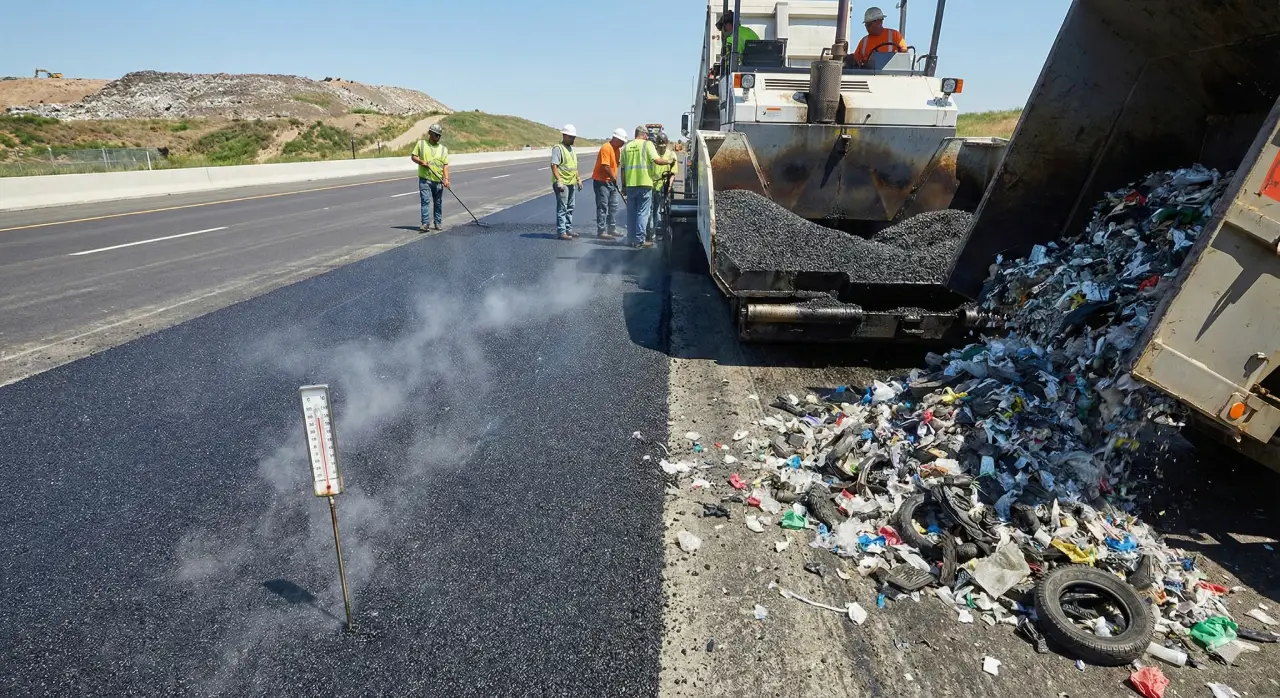
A team at Charles Darwin University (CDU) is exploring this idea. Their research looks at mixing shredded tyre waste from trucks and cars, along with recycled plastics, into the bitumen and asphalt used to pave roads. Bitumen is the black, sticky material that holds roads together, while asphalt is the mixture of bitumen and stones that forms the road surface.
The NT has unique challenges when it comes to building roads. The region’s extreme heat and strong sunlight can cause regular road materials to break down faster. Over time, the roads can become hard, brittle, and more likely to crack or develop potholes. Materials used in cooler climates don’t always work well in the NT’s tough conditions.
The CDU team, led by PhD candidate Ramin Shahbazi, wants to see if roads made with recycled tyres and plastics can match—or even outperform—traditional road materials in these harsh environments. Early findings suggest that these recycled mixtures could make roads tougher and more flexible, helping them last longer despite the heat.
There are other benefits, too. Using recycled tyres and plastics can be more cost-effective than buying new, specially made materials. It also helps reduce the environmental impact of road construction by keeping waste out of landfills and cutting down on the need for new raw materials.
If this approach proves successful, it could lead to more widespread use of recycled materials in road building across the NT and beyond. It might also encourage investment in local recycling facilities, creating jobs and supporting a “circular economy”—an economic system where resources are reused and recycled instead of thrown away.
This research is a partnership between Charles Darwin University and the Northern Territory Government’s Department of Logistics and Infrastructure.
The study, “Rubber and plastic waste-modified asphalt binders and mixtures: Performance against environmentally induced distresses,” was published in the Journal of Traffic and Transportation Engineering. The lead researcher is CDU PhD candidate Ramin Shahbazi, with co-authors from Charles Darwin University and the Northern Territory Government’s Department of Logistics and Infrastructure.